
Charlie Samson: Telling Stories That Actually Move People
There’s a difference between making something look good and making someone feel something.
For Charlie Samson, that difference is everything.
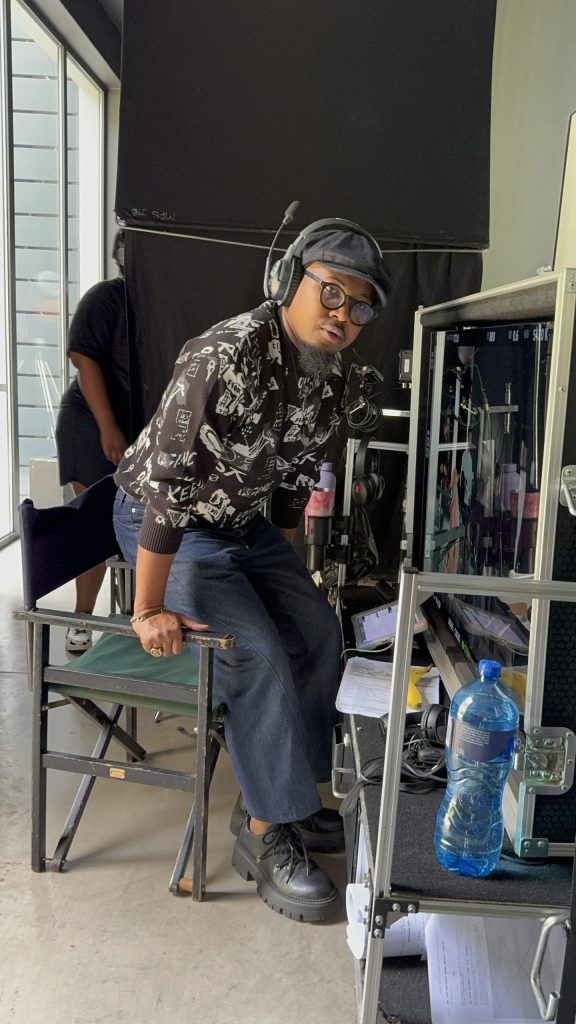
He describes himself as a storyteller first, not just a director. And for him, storytelling isn’t about any one role on set, it’s about alignment. Every department, every decision, every movement exists to serve a single purpose: the story.
“People sometimes forget that all of those roles ultimately exist to serve one thing,” he says. “Each department contributes through its own craft, but the fundamental purpose is always to tell a compelling story.”
It’s a perspective that cuts through the noise of modern filmmaking. In a space where visuals, trends, and techniques often take centre stage, Charlie brings it back to something simpler and harder to achieve: emotional truth.
“Anyone can tell actors where to stand or how to move,” he explains. “But telling a story that genuinely moves people… that requires something deeper.”


Where Theatre Still Lives in Film
Charlie’s approach to directing is shaped heavily by theatre, even if he didn’t fully realise it at first.
In theatre, there are no camera tricks to rely on. Just actors, space, and movement. That limitation becomes a strength, forcing intention into every moment.
“I tend to apply that same principle in film,” he says. “Actors move through the space, and the camera becomes the audience observing the performance.”
It’s a subtle shift, but an important one. Instead of building scenes around the camera, he builds them around performance and presence.
He credits directors like Catherine Cooke for mastering this approach, pointing to powerful, emotionally charged scenes where blocking and movement carry as much weight as dialogue.
On Making Something Personal
Charlie’s short film A Lament carries emotional weight, but his reason for telling that story is refreshingly honest.
“I just needed an excuse to apply to the New York Film Academy,” he says.
No over-explanation. No forced meaning. Just a reminder that sometimes stories begin from practical decisions and grow into something more.

What Matters Most
At the core of everything Charlie makes is a simple intention: “I want people to feel something.”
It’s direct. No overthinking. No complicated framing. And maybe that’s what makes it resonate.
In a world of constant scrolling, fast content, and surface-level storytelling, there’s something grounding about that approach. It reflects what Quiks is building too: stories that don’t just pass by, but leave something behind.
What He’s Watching
Charlie’s favourite short film is The Storekeeper by Gavin Hood — a fitting choice for someone drawn to emotionally driven storytelling.
Closing
Charlie Samson isn’t trying to do the most. He’s trying to do what matters.
And in short-form storytelling, that might be the difference between something you watch and something you remember.
Watch Charlie’s film, A Lament here.